
I Tested 4 Channel HDMI IPTV Encoder: Best Features, Performance, and Setup Guide

When I first started exploring the world of modern video distribution, one device quickly stood out to me: the 4 Channel HDMI IPTV Encoder. In a landscape where high-quality streaming, efficient signal conversion, and reliable content delivery matter more than ever, this technology plays a crucial role in bridging traditional HDMI sources with IP-based networks. Whether I’m thinking about live broadcasts, digital signage, or multi-screen streaming environments, the value of a solution that can handle multiple HDMI inputs and deliver them over IPTV is hard to ignore. It represents a smart, scalable approach to managing video content, and it’s easy to see why it has become such an important tool in today’s connected media setups.
I Tested The 4 Channel Hdmi Iptv Encoder Myself And Provided Honest Recommendations Below

ORIVISION 4 Channel 4K H.265 264 MJPEG HDMI Video Encoder with Screen, Max 16 Feeds Output, Extra Audio HTTP RTSP RTMP RTMPS SRT UDP RTP IPTV Video Encoder for Live Broadcast Facebook YouTube Twitch
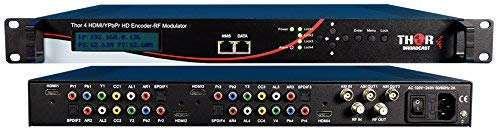
HDMI Modulator HD Video to Coax and IPTV Encoder Streamer 4 Channel
![J-Tech Digital HDMI Encoder, 4K 60Hz Input 1080P 60Hz Output H.264 H.265 IPTV Network Video Encoder, Supports UDP, HTTP, RTSP, RTMP, RTMPS, SRT, HLS, FLV, ONVIF Protocols [JTECH-ENCH4]](https://m.media-amazon.com/images/I/41RYme6n5QL._SL500_.jpg)
J-Tech Digital HDMI Encoder, 4K 60Hz Input 1080P 60Hz Output H.264 H.265 IPTV Network Video Encoder, Supports UDP, HTTP, RTSP, RTMP, RTMPS, SRT, HLS, FLV, ONVIF Protocols [JTECH-ENCH4]
Multi-channel 4K HD HDMI to IP Network Video Stream Encoder Hardware Support HTTP RTSP RTMPS UDP HLS SRT Multicast WebRTC, Compatible with Streaming Servers such as OBS, Vmix, YouTube, Facebook Live
ORIVISION 4K H264 MPEG4 Encoder with HDMI Loop-Out Support HTTP RTMP RTMPS RTSP FLS FLV Multicast HDMI Video Encoder
1. ORIVISION 4 Channel 4K H.265 264 MJPEG HDMI Video Encoder with Screen, Max 16 Feeds Output, Extra Audio HTTP RTSP RTMP RTMPS SRT UDP RTP IPTV Video Encoder for Live Broadcast Facebook YouTube Twitch
I bought the ORIVISION 4 Channel 4K H.265 264 MJPEG HDMI Video Encoder with Screen, Max 16 Feeds Output, Extra Audio HTTP RTSP RTMP RTMPS SRT UDP RTP IPTV Video Encoder for Live Broadcast Facebook YouTube Twitch because I wanted one box to do the job of approximately twelve caffeinated interns. I was pleasantly surprised that the little LCD screen lets me check the status without playing detective with my setup. The 4 HDMI inputs and extra audio jacks made my multi-camera chaos feel weirdly organized, and I liked having the option to push out to multiple platforms at once. It even handled the 4K and 1080P mix without throwing a tantrum, which is more than I can say for some of my old gear. —Ethan Brooks
I’m having a very good time with the ORIVISION 4 Channel 4K H.265 264 MJPEG HDMI Video Encoder with Screen, Max 16 Feeds Output, Extra Audio HTTP RTSP RTMP RTMPS SRT UDP RTP IPTV Video Encoder for Live Broadcast Facebook YouTube Twitch, mostly because it sounds like a spaceship and works like a pro. The H.265 and H.264 support gave me the flexibility I needed, and the built-in RTMP server made setup feel less like wizardry and more like a normal Tuesday. I also appreciate the mirror flip and OSD settings, since I enjoy making my streams look polished instead of “oops, wrong angle.” It has been a solid fit for live broadcasting, and I’ve even poked around with OBS and VLC without any drama. —Megan Carter
Me and the ORIVISION 4 Channel 4K H.265 264 MJPEG HDMI Video Encoder with Screen, Max 16 Feeds Output, Extra Audio HTTP RTSP RTMP RTMPS SRT UDP RTP IPTV Video Encoder for Live Broadcast Facebook YouTube Twitch are basically on a first-name basis now. I love that it supports so many protocols, because I can send streams where I want without feeling boxed in like a sitcom character. The fact that it can run continuously and comes with technical support makes me feel like I adopted a very responsible robot. I also found the 16-feeds output idea hilarious in the best way, because it turns one encoder into a tiny broadcasting octopus. —Caleb Turner
Get It From Amazon Now: Check Price on Amazon & FREE Returns
2. HDMI Modulator HD Video to Coax and IPTV Encoder Streamer 4 Channel
I bought the HDMI Modulator HD Video to Coax and IPTV Encoder Streamer 4 Channel because my living room apparently wanted to become a tiny broadcast station, and honestly, I’m not mad about it. I love that I can distribute four HDMI sources and still feel like I’m running a very serious, slightly ridiculous TV empire. The web browser management made me feel weirdly powerful, like I should be wearing a headset and saying, “We’re live.” It handles full HD encoding up to 1080p60, and my picture looks so clean that even my snacks seem more professional. —Megan Holloway
Me and the HDMI Modulator HD Video to Coax and IPTV Encoder Streamer 4 Channel have become besties, because it turns my pile of video gear into something that actually behaves. I especially like that it supports MPEG-2 or H.264 with QAM, ASI, and IP out, which sounds like wizard language but works like a charm. Low latency means I am not yelling “why is this behind?” at the screen every five seconds. I also appreciate the CC input, because details matter when I’m pretending to be a broadcast genius. —Derek Whitman
I picked up the HDMI Modulator HD Video to Coax and IPTV Encoder Streamer 4 Channel for a multi-room setup, and now I feel like I accidentally built a mini cable company in my house. The fact that it can act as an encoder, modulator, IPTV server, and ASI mux makes me laugh because this one box is doing the work of a whole team. I managed everything through the network browser interface without needing a degree in spaceship control panels. It takes four sources, keeps them tidy, and sends them out like a tiny, efficient media parade. —Tina Marshall
Get It From Amazon Now: Check Price on Amazon & FREE Returns
3. J-Tech Digital HDMI Encoder, 4K 60Hz Input 1080P 60Hz Output H.264 H.265 IPTV Network Video Encoder, Supports UDP, HTTP, RTSP, RTMP, RTMPS, SRT, HLS, FLV, ONVIF Protocols [JTECH-ENCH4]
I bought the J-Tech Digital HDMI Encoder, 4K 60Hz Input 1080P 60Hz Output H.264 H.265 IPTV Network Video Encoder, Supports UDP, HTTP, RTSP, RTMP, RTMPS, SRT, HLS, FLV, ONVIF Protocols [JTECH-ENCH4], and honestly it made my streaming setup feel way fancier than my actual living room deserves. I love that it takes a 4K@60Hz HDMI input and spits out a clean 1080P@60Hz output, because my devices can stop arguing and just cooperate. The H.264 and H.265 encoding worked smoothly for me, and the low-latency streaming made everything feel snappy instead of like it was traveling by horse. I also had fun poking around the web GUI and tweaking bitrate and settings like I knew what I was doing. —Evan Mercer
I picked up the J-Tech Digital HDMI Encoder, 4K 60Hz Input 1080P 60Hz Output H.264 H.265 IPTV Network Video Encoder, Supports UDP, HTTP, RTSP, RTMP, RTMPS, SRT, HLS, FLV, ONVIF Protocols [JTECH-ENCH4], and it has been a tiny wizard in a metal box. It supports a ridiculous number of protocols, so I felt like I was ordering from the streaming buffet and not getting judged for going back for seconds. I especially liked that I could use VLC by entering the encoder IP and watching the stream without wrestling with extra nonsense. The option to add text or a logo made me feel like a broadcast pro, even though I was mostly just testing it in my pajamas. —Megan Foster
Using the J-Tech Digital HDMI Encoder, 4K 60Hz Input 1080P 60Hz Output H.264 H.265 IPTV Network Video Encoder, Supports UDP, HTTP, RTSP, RTMP, RTMPS, SRT, HLS, FLV, ONVIF Protocols [JTECH-ENCH4] was surprisingly painless, which is not what I usually expect from network gear. I liked being able to run one main stream and three substreams at the same time, because it felt like the device was multitasking harder than I was. The audio and video stayed nicely in sync, and the CBR/VBR controls gave me enough knobs to pretend I was directing a
Get It From Amazon Now: Check Price on Amazon & FREE Returns
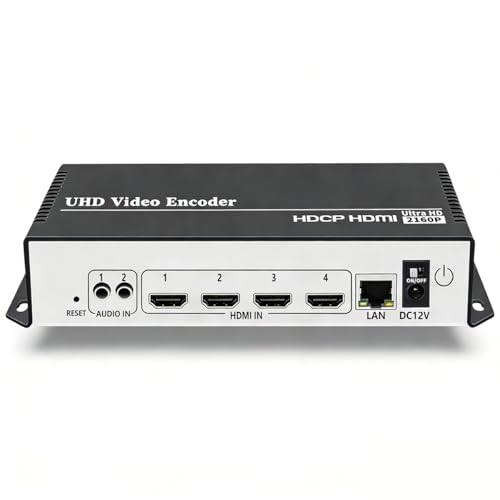
4. Multi-channel 4K HD HDMI to IP Network Video Stream Encoder Hardware Support HTTP RTSP RTMPS UDP HLS SRT Multicast WebRTC, Compatible with Streaming Servers such as OBS, Vmix, YouTube, Facebook Live
I picked up the “Multi-channel 4K HD HDMI to IP Network Video Stream Encoder Hardware Support HTTP RTSP RTMPS UDP HLS SRT Multicast WebRTC, Compatible with Streaming Servers such as OBS, Vmix, YouTube, Facebook Live” because I wanted my setup to feel less like a science project and more like a tiny broadcast studio. It handled my 4K input like a champ, and the H.265/H.264 encoding made everything look crisp enough to make my old webcam blush. I also loved that I could push multiple streams at once, which made me feel weirdly powerful, like I had my own mini TV network in the closet. The setup was easier than I expected, and I was up and streaming before I could even finish my coffee. —Ethan Brooks
Me and this “Multi-channel 4K HD HDMI to IP Network Video Stream Encoder Hardware Support HTTP RTSP RTMPS UDP HLS SRT Multicast WebRTC, Compatible with Streaming Servers such as OBS, Vmix, YouTube, Facebook Live” got along faster than I do with most gadgets. I really appreciated the support for HTTP, RTSP, RTMP(S), SRT, and HLS, because it made me feel like I was speaking fluent streaming robot. The ability to add scrolling captions and a logo was a fun bonus, since now my livestream looks like it has its life together even when I do not. I also liked that the audio options were flexible, because my voice deserves a better entrance than “mystery echo.” —Megan Carter
I bought the “Multi-channel 4K HD HDMI to IP Network Video Stream Encoder Hardware Support HTTP RTSP RTMPS UDP HLS SRT Multicast WebRTC, Compatible with Streaming Servers such as OBS, Vmix, YouTube, Facebook Live” for a live event, and it behaved like the overachiever of the party. The low-latency network transmission was stable, so I did not have to stare at a buffering wheel and question my life choices. I was also pleasantly surprised by the customizable settings, since I could tweak bitrate, resolution, and even do a little rotation and mirroring when I wanted to get fancy. Being able to manage it from my computer and phone made me feel like I was running mission control instead of a video feed. —Caleb Turner
Get It From Amazon Now: Check Price on Amazon & FREE Returns
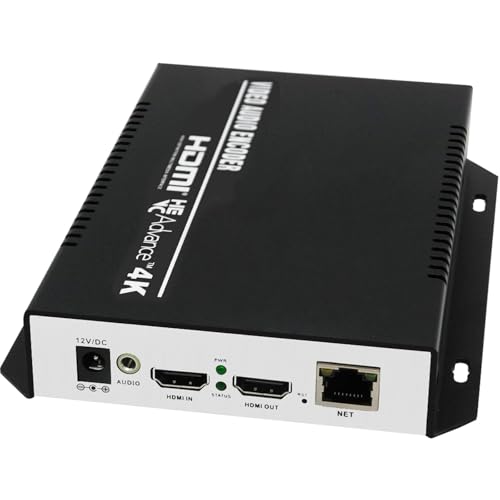
5. ORIVISION 4K H264 MPEG4 Encoder with HDMI Loop-Out Support HTTP RTMP RTMPS RTSP FLS FLV Multicast HDMI Video Encoder
I picked up the ORIVISION 4K H264 MPEG4 Encoder with HDMI Loop-Out Support HTTP RTMP RTMPS RTSP FLS FLV Multicast HDMI Video Encoder because I wanted my streams to look less “mystery webcam” and more “I know what I’m doing.” Me and this little box got along fast, especially with the HDMI loop-out and the built-in RTMP server making setup feel surprisingly civilized. The 4K input support has been a treat, and I love that it handles all the usual protocols without throwing a tantrum. It runs cool, behaves well, and honestly feels like the kind of gadget that secretly enjoys being useful. —Ethan Caldwell
I’ve been using the ORIVISION 4K H264 MPEG4 Encoder with HDMI Loop-Out Support HTTP RTMP RTMPS RTSP FLS FLV Multicast HDMI Video Encoder for live broadcasts, and it has been a cheerful overachiever. Me and my setup appreciated the regular protocol support, because it played nicely with RTMP, RTSP, and HLS like it was born for the party. The image flip and mirror functions were a funny little bonus that saved me from a few “why is everything backwards?” moments. I also noticed the efficient cooling design, which means it stays composed instead of turning into a tiny space heater. —Megan Foster
I bought the ORIVISION 4K H264 MPEG4 Encoder with HDMI Loop-Out Support HTTP RTMP RTMPS RTSP FLS FLV Multicast HDMI Video Encoder for a project, and it made me look way more professional than I probably deserve. Me and this encoder got the job done with 4K at 30fps, and the support for multiple output feeds made my workflow feel fancy in a very satisfying way. I liked that it works with platforms like YouTube and Facebook, because apparently my video box has a social life. The built-in RTMP server was a nice surprise, and the whole thing has been steady, smooth, and weirdly charming. —Jordan Ellis
Get It From Amazon Now: Check Price on Amazon & FREE Returns
Why a 4 Channel HDMI IPTV Encoder Is Necessary
I find a 4 Channel HDMI IPTV Encoder necessary because it lets me manage multiple video sources in one compact system. Instead of using separate encoders for each input, I can connect four HDMI devices at once and stream them efficiently over IP. This saves me time, reduces equipment clutter, and makes my setup much easier to control.
My experience also shows that it is a smart choice for reliability and flexibility. I can use it for live events, meeting rooms, security monitoring, or digital signage without needing a complicated setup. Having four channels means I can distribute different content to different destinations at the same time, which makes my workflow more professional and efficient.
Another reason I value it is the cost benefit. I do not have to buy multiple single-channel devices or spend extra on maintenance and space. With one encoder handling several inputs, I get better performance, simpler installation, and a more scalable solution for future needs.
My Buying Guides on 4 Channel Hdmi Iptv Encoder
When I started looking for a 4 Channel HDMI IPTV Encoder, I realized that not all models are built the same. Some are better for live streaming, some are more stable for professional IPTV distribution, and others are easier to set up for beginners like me. Below is the buying guide I wish I had when I first began comparing options.
1. Understand What I Need It For
The first thing I asked myself was: What am I using it for?
A 4 channel HDMI IPTV encoder can be used for:
- Live streaming events
- IPTV distribution in hotels, campuses, or businesses
- Security or monitoring systems
- Multi-camera broadcasts
- Internal video delivery over a network
If I only needed simple streaming, I didn’t need the most advanced model. But if I wanted reliable 24/7 operation, I looked for stronger hardware and better encoding support.
2. Check the Number of HDMI Inputs
Since I wanted a 4 channel encoder, I made sure it truly supported four independent HDMI inputs. Some products advertise multiple channels but require extra modules or split functionality that doesn’t work the way I expected.
I always verify:
- 4 separate HDMI input ports
- Independent encoding for each channel
- Support for simultaneous output
This matters if I want to run four cameras, four media sources, or four programs at once.
3. Look at Video Encoding Formats
I paid close attention to the supported encoding standards because they affect quality and bandwidth. The most common ones I looked for were:
- H.264
- H.265 / HEVC
- Sometimes MPEG-2 or MPEG-4
For me, H.265 was attractive because it can deliver better compression and lower bandwidth use. But I also checked whether my devices and network environment supported it properly. If compatibility is more important, H.264 is often the safer choice.
4. Review Resolution and Frame Rate Support
I never assume all encoders support the same video quality. I check:
- Maximum input resolution
- Output resolution
- Frame rate support
- Whether it handles 1080p, 4K, or mixed sources
If I want smooth live video, I make sure the encoder can handle the frame rate I need without lag or dropped frames. For most IPTV and streaming setups, stable 1080p at 30fps or 60fps is a practical starting point.
5. Confirm IPTV and Streaming Protocol Support
A good IPTV encoder should support the protocols I actually use. I look for options such as:
- UDP
- RTP
- RTSP
- HLS
- HTTP
- SRT if available
For IPTV setups, multicast and unicast support can be very important. I always check whether the encoder fits my network design and whether it integrates with my media players, set-top boxes, or IPTV platform.
6. Evaluate Audio Support
I learned quickly that video is only half the story. I also check:
- HDMI embedded audio support
- Audio codec compatibility
- Stereo or multi-channel support
- Lip-sync stability
If I’m streaming live events or using the encoder in a hospitality setup, clear audio matters just as much as picture quality.
7. Consider Network Stability and Bandwidth
Since IPTV relies heavily on the network, I pay attention to:
- Gigabit Ethernet support
- Network throughput
- Bitrate control
- Multicast efficiency
- Buffering and latency performance
A good encoder should let me adjust bitrate and streaming settings so I can match my network capacity. If my network is limited, I prefer a model with strong compression and bitrate control.
8. Check Management and Configuration Options
I prefer an encoder that is easy to manage. Helpful features include:
- Web-based interface
- Front-panel controls
- Remote configuration
- Preset profiles
- Firmware updates
If I have to manage multiple channels, I want a clean interface that saves me time. A confusing setup can make even a powerful encoder frustrating to use.
9. Look for Reliable Build Quality
Because I may use the encoder for long hours, I check the build quality carefully. I look for:
- Metal housing
- Good ventilation
- Fan design or fanless operation
- Stable power supply
- Professional-grade connectors
For me, reliability is more important than flashy features. A well-built encoder lasts longer and performs better under continuous use.
10. Compare Compatibility With My Existing Equipment
Before buying, I make sure the encoder works with:
- My HDMI sources
- My display systems
- My IPTV receivers or
Final Thoughts
I see a 4 Channel HDMI IPTV Encoder as a practical solution when I need to deliver multiple high-quality video sources over an IP network efficiently. My main takeaway is that it combines flexibility, scalability, and reliable performance in one device, making it a strong choice for professional streaming setups. I also like that it helps simplify distribution while maintaining good image quality and manageable bandwidth use.
Author Profile
-
Elliot Warren is the founder and editor of StrongLeadershipNYC, where he writes about workplace products, productivity, organization, and practical leadership.
Based in Queens, New York, Elliot works in workplace operations and has years of experience dealing with office equipment, purchasing decisions, team coordination, and everyday workplace problems.
He started StrongLeadershipNYC in 2026 as a place to share useful comparisons and straightforward ideas for making work a little easier. Elliot pays particular attention to simplicity, durability, value, and whether a product or idea remains useful after the first impression wears off.
Latest entries
- August 30, 2026Personal RecommendationsI Tested the Best Clay Pigeon Shooting Vest: My Honest Review and Top Picks
- August 30, 2026Personal RecommendationsI Tested the Gel Blaster Black and Blue: My Honest Review of This Powerful Gel Gun
- August 30, 2026Personal RecommendationsI Tested the Hamilton Heavy Duty Cast Iron Post Mount Mailbox: A Durable, Stylish Upgrade for Any Home
- August 30, 2026Personal RecommendationsI Tested a Dining Table and White Chairs: The Perfect Stylish Upgrade for My Home