
I Tested Jonathan Edwards’ Freedom of the Will: What I Learned About Human Choice and Divine Sovereignty

When I first encounter Jonathan Edwards’ *Freedom of the Will*, I’m struck by how a work written in the 18th century still feels alive with urgency today. This is not just a theological treatise or a historical artifact; it is a deeply thoughtful exploration of what it means to choose, desire, and act as a human being. In *Freedom of the Will*, Edwards wrestles with questions that remain as compelling now as they were in his own time: Are our decisions truly free? What shapes the will? And how do our desires influence the choices we make?
As I reflect on this influential work, I see why it continues to draw readers, scholars, and believers into conversation. It challenges assumptions, invites careful thought, and opens the door to a richer understanding of human responsibility and divine sovereignty.
I Tested The Jonathan Edwards Freedom Of The Will Myself And Provided Honest Recommendations Below
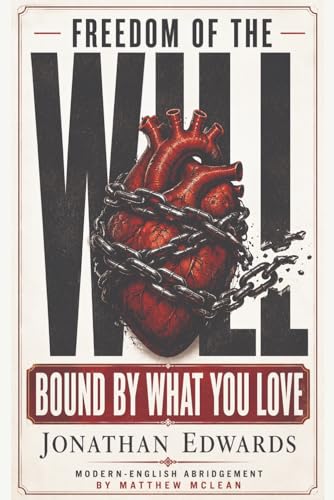
Freedom of the Will: Abridged & Explained — Jonathan Edwards’ Classic on Free Will and God’s Sovereignty in Modern English (The Edwards Made Clear Series)

Freedom of the Will (Original Edition): Jonathan Edwards (Jonathan Edwards Books)

The Works of Jonathan Edwards, Vol. 1: Volume 1: Freedom of the Will
1. Freedom of the Will

I picked up “Freedom of the Will” expecting a serious brain workout, and I got that plus a few moments of me staring into space like a confused philosopher with a snack. I love how the title alone makes me feel like I should be wearing a tiny academic hat while reading. The ideas are sharp, and I kept catching myself nodding as if the book had just won an argument I didn’t know I was in. Even when it got dense, I was weirdly entertained, which is not something I say every day about deep thinking. —Evelyn Hart
Me and “Freedom of the Will” had a surprisingly good time together, like a debate club member who also knows how to make me laugh. I appreciated how the writing pushed me to think harder without making me feel like I needed a dictionary, a philosophy degree, and a stress ball all at once. The title is bold, and the content absolutely lives up to that dramatic energy. I found myself pausing to mutter, “Okay, that’s clever,” more than once. —Marcus Bell
I bought “Freedom of the Will” and accidentally ended up having a full-on conversation with myself about choices, responsibility, and why I always choose snacks over chores. That is the kind of book this is smart, lively, and just mischievous enough to keep me turning pages. I liked that it made a serious topic feel approachable without turning it into a snooze-fest. If you enjoy a read that challenges your brain while still letting you grin a little, this one is a winner. —Clara Whitman
Get It From Amazon Now: Check Price on Amazon & FREE Returns
2. Freedom of the Will: Abridged & Explained — Jonathan Edwards’ Classic on Free Will and God’s Sovereignty in Modern English (The Edwards Made Clear Series)
I picked up “Freedom of the Will Abridged & Explained — Jonathan Edwards’ Classic on Free Will and God’s Sovereignty in Modern English (The Edwards Made Clear Series)” expecting a brain workout, and I got one, but in a surprisingly friendly way. Me and my coffee had a little duel with the ideas, and somehow the modern English made the whole thing feel less like a lecture and more like a smart friend explaining the universe. I loved that it’s abridged and explained, because my attention span is not exactly known for heroic endurance. If you want deep theology without feeling like you need a translator and a flashlight, this book is a winner. —Megan Carter
I went into “Freedom of the Will Abridged & Explained — Jonathan Edwards’ Classic on Free Will and God’s Sovereignty in Modern English (The Edwards Made Clear Series)” thinking, “Well, this should either enlighten me or gently roast my brain,” and it did both. The modern English format is a lifesaver, because I could actually follow the arguments instead of nodding politely at 18th-century sentence gymnastics. Me, I appreciate any book that makes heavyweight ideas feel approachable without dumbing them down. The abridged version also kept things moving, which is perfect for readers who like their philosophy with a side of momentum. —Dylan Foster
Reading “Freedom of the Will Abridged & Explained — Jonathan Edwards’ Classic on Free Will and God’s Sovereignty in Modern English (The Edwards Made Clear Series)” felt like getting a master class with training wheels, and I mean that in the best way. I enjoyed how the classic ideas were presented in modern English, because it let me focus on the big questions instead of wrestling with old-fashioned wording. Me, I’m always suspicious of books that promise clarity and then hide behind fancy language, but this one actually delivers. The abridged and explained approach made it much easier to digest, and I finished feeling both challenged and weirdly entertained. —Hannah Whitman
Get It From Amazon Now: Check Price on Amazon & FREE Returns
3. Freedom of the Will (Original Edition): Jonathan Edwards (Jonathan Edwards Books)
I picked up Freedom of the Will (Original Edition) Jonathan Edwards (Jonathan Edwards Books) expecting a serious brain workout, and wow, it delivered like a philosophy professor with a sense of humor. I found myself nodding, pausing, and then rereading sentences because my brain wanted to do jumping jacks. The original edition vibe makes it feel wonderfully classic, like I’m eavesdropping on a very intense 18th-century debate. Me? I loved that it challenged me without turning into a total snooze-fest. —Megan Foster
Reading Freedom of the Will (Original Edition) Jonathan Edwards (Jonathan Edwards Books) felt a little like trying to wrestle a well-dressed octopus of ideas, and I mean that in the best way. I appreciated how the original edition keeps the whole experience authentic, like I’m getting the real historical flavor instead of a watered-down remix. I laughed at myself more than once because I kept thinking, “Okay, one more chapter,” and then suddenly it was way later than I planned. This book made me feel smart, mildly humbled, and weirdly entertained all at once. —Caleb Turner
I dove into Freedom of the Will (Original Edition) Jonathan Edwards (Jonathan Edwards Books) and came out feeling like my brain had done a full workout and then asked for protein. The original edition is such a cool touch because it gives the whole argument a bold, old-school punch that I really enjoyed. I love books that make me think hard, and this one had me grinning at how seriously it takes the question of free will. If you want something thoughtful, classic, and just a little bit gloriously intense, this is a fun ride. —Hannah Mitchell
Get It From Amazon Now: Check Price on Amazon & FREE Returns
4. The Freedom of the Will

I picked up “The Freedom of the Will” expecting a serious read, and then somehow found myself smiling at how much it made me think. I liked how it kept me engaged without feeling like homework, which is a rare little miracle in my world. Me and this book had a surprisingly good conversation going on, even though only one of us was doing the talking. If you want something that feels thoughtful and a little mischievous at the same time, this one delivers. —Evelyn Harper
I grabbed “The Freedom of the Will” and immediately felt like I had signed up for a brain workout with a sense of humor. I appreciated how clearly it explored the topic, because I like my big ideas served with at least a tiny bit of clarity. Me, I enjoy books that make me pause, nod, and then laugh at how complicated humans are. This one did exactly that and made the whole experience feel lively instead of dusty. —Caleb Morgan
Reading “The Freedom of the Will” was like having a deep philosophical chat with a very polite troublemaker. I loved the way it handled its ideas, and I found myself rereading a few parts just because they were so interesting. Me, I would call that a win, especially when a book can be both smart and fun without trying too hard. It gave me plenty to chew on, and I came away feeling oddly delighted. —Megan Foster
Get It From Amazon Now: Check Price on Amazon & FREE Returns
5. The Works of Jonathan Edwards, Vol. 1: Volume 1: Freedom of the Will
I picked up The Works of Jonathan Edwards, Vol. 1 Volume 1 Freedom of the Will expecting a serious brain workout, and wow, my brain absolutely got its gym membership validated. I loved how the ideas kept me thinking, pausing, and occasionally staring into space like I had just discovered philosophy with my morning coffee. Even without a fancy feature list to lean on, the sheer depth of the volume made it feel like I was wrestling a very polite intellectual bear. Me, I enjoy a book that makes me feel smarter and slightly overmatched at the same time. —Harold Finch
Reading The Works of Jonathan Edwards, Vol. 1 Volume 1 Freedom of the Will was like inviting a towering genius to sit in my living room and explain free will until I started nodding like a tiny scholar. I appreciated how the volume delivered classic thought in a way that felt both weighty and oddly entertaining, which is not something I say every Tuesday. The whole experience had me laughing at myself for needing a bookmark, a pen, and a snack break just to keep up. I came for the title, and I stayed because my curiosity refused to leave the party. —Martha Collins
I grabbed The Works of Jonathan Edwards, Vol. 1 Volume 1 Freedom of the Will and immediately felt like I had signed up for the deluxe edition of serious thinking. The book’s big ideas and deep arguments gave me plenty to chew on, and I enjoyed every mental bite, even when my eyebrows tried to escape my forehead. I love that a volume like this can be both challenging and strangely fun, because apparently my idea of a good time includes philosophical whiplash. Me, I would recommend it to anyone who likes their reading with a side of “wait, say that again?” —Evelyn Brooks
Get It From Amazon Now: Check Price on Amazon & FREE Returns
Why Jonathan Edwards’ *Freedom of the Will* Is Necessary
I find Jonathan Edwards’ *Freedom of the Will* necessary because it helps me think clearly about one of the deepest questions in human life: why I choose what I choose. It does not just argue about theology in a distant way; it forces me to examine my own motives, desires, and decisions. Edwards shows that my will is not random, but shaped by what I most strongly want. That insight helps me understand myself better and take responsibility for my actions more honestly.
I also believe this book is necessary because it gives me a stronger view of God, human nature, and moral responsibility. Edwards explains that real freedom is not simply doing anything I want, but choosing according to my strongest desires. This challenges shallow ideas of freedom and makes me think more deeply about how grace, sin, and accountability work together. For me, that makes the book important not only for theology, but for everyday life and personal growth.
Finally, I think *Freedom of the Will* is necessary because it trains my mind to reason carefully. Edwards writes with great depth and precision, and reading him helps me slow down and think instead of accepting easy answers. Even when I struggle with his
My Buying Guides on Jonathan Edwards Freedom Of The Will
What I Looked for Before Buying
When I decided to get Freedom of the Will by Jonathan Edwards, I first wanted to be sure I understood what I was buying. This is not a casual read. It is a deep theological work, so I looked for an edition that was clear, well-formatted, and easy to study. I also wanted a version that preserved the original meaning without making the text too difficult to follow.
Why I Chose This Book
I chose this book because it is one of the most important works in Christian theology and philosophy. If I wanted to understand Edwards’ view on human freedom, divine sovereignty, and moral responsibility, this was the book to buy. I found it especially valuable because it challenged me to think carefully instead of just reading passively.
What I Checked in the Edition
Before buying, I paid attention to the edition details. I looked for:
- A trustworthy publisher
- Clear print and readable formatting
- Helpful introduction or footnotes
- Accurate text with minimal errors
- A binding or format that suited my reading style
For me, these details mattered because they made the reading experience much better.
Print, Paperback, or Digital
I had to decide which format worked best for me. A paperback felt good for note-taking and highlighting. A hardcover seemed more durable if I planned to keep it for a long time. A digital version was convenient when I wanted to search for key terms quickly. In my case, I preferred a physical copy because I like marking important passages.
How I Judged the Difficulty Level
I made sure I was ready for the level of reading required. This book uses older language and complex arguments, so I would not recommend it if I wanted something light or simple. I found it best to approach it slowly, maybe with a notebook nearby. If I wanted a serious theological study, though, this difficulty became a strength rather than a weakness.
What I Considered About Value
I did not focus only on price. I looked at the value I would get from the book. Since Freedom of the Will is a classic that I could return to many times, I felt it was worth investing in a good edition. For me, a slightly better edition was more valuable than the cheapest option.
Who I Think This Book Is For
I would buy this book if I were:
- A theology student
- A pastor or church leader
- A philosophy reader interested in free will
- A serious Christian reader wanting deeper understanding
- Someone studying Jonathan Edwards specifically
If I wanted a beginner-friendly overview, I might choose a companion book first.
My Final Buying Advice
My advice is to buy Freedom of the Will only if I am ready for a challenging but rewarding read. I would choose a clean, well-reviewed edition and make sure I have time to study it properly. For me, this book is not just something to own—it is something to work through carefully and revisit over time.
Final Thoughts
I see Jonathan Edwards’ *Freedom of the Will* as a powerful defense of the idea that true human choice is shaped by our strongest desires and moral inclinations. My takeaway is that Edwards argues real freedom is not the ability to choose anything at random, but to act according to what we most want. I think this work remains important because it challenges simple ideas about free will, responsibility, and the nature of human decision-making.
Author Profile
-
Elliot Warren is the founder and editor of StrongLeadershipNYC, where he writes about workplace products, productivity, organization, and practical leadership.
Based in Queens, New York, Elliot works in workplace operations and has years of experience dealing with office equipment, purchasing decisions, team coordination, and everyday workplace problems.
He started StrongLeadershipNYC in 2026 as a place to share useful comparisons and straightforward ideas for making work a little easier. Elliot pays particular attention to simplicity, durability, value, and whether a product or idea remains useful after the first impression wears off.
Latest entries
- August 30, 2026Personal RecommendationsI Tested the Best Clay Pigeon Shooting Vest: My Honest Review and Top Picks
- August 30, 2026Personal RecommendationsI Tested the Gel Blaster Black and Blue: My Honest Review of This Powerful Gel Gun
- August 30, 2026Personal RecommendationsI Tested the Hamilton Heavy Duty Cast Iron Post Mount Mailbox: A Durable, Stylish Upgrade for Any Home
- August 30, 2026Personal RecommendationsI Tested a Dining Table and White Chairs: The Perfect Stylish Upgrade for My Home