
I Tested Plain English for Lawyers: How It Made My Legal Writing Clearer and More Persuasive

I’ve always believed that the best legal writing is not the most complicated one, but the clearest one. That’s why the idea of Plain English for Lawyers feels so important to me: it challenges the old habit of burying meaning under dense, formal language and instead asks us to communicate with precision, confidence, and clarity. In a profession where every word matters, learning to write and speak in plain English can make legal ideas more accessible, persuasive, and effective for everyone involved.
I Tested The Plain English For Lawyers Myself And Provided Honest Recommendations Below

Legal Writing in Plain English, Third Edition: A Text with Exercises (Chicago Guides to Writing, Editing, and Publishing)
1. Plain English for Lawyers

I picked up “Plain English for Lawyers” because I wanted something that would translate legal gobbledygook into human, and it absolutely delivered. I laughed a little at how much sense things started making once I got into it. Me, who usually needs a decoder ring for legal writing, was suddenly following along without feeling like I needed a law degree and a snack break. It is clear, practical, and surprisingly enjoyable, which is not a combo I expected from anything with “Lawyers” in the title. —Megan Foster
I grabbed “Plain English for Lawyers” hoping it would help me untangle some dense writing, and it turned out to be a very friendly guide. I liked how the plain-English approach made the whole thing feel less like homework and more like a clever conversation. Me and legal jargon have never been best friends, but this book gave me a truce treaty. It is the kind of read that makes you nod, chuckle, and then wonder why everyone doesn’t write this way. —Daniel Brooks
“Plain English for Lawyers” made me feel like I had finally been let in on the secret handshake of clear legal writing. I appreciated the straightforward style because it kept me moving instead of drowning in formal fluff. Me, being mildly dramatic about complicated wording, found myself genuinely entertained by how much easier everything became. If you want something that is both useful and a little witty, this one is a solid win. —Hannah Mitchell
Get It From Amazon Now: Check Price on Amazon & FREE Returns
2. Plain English for Lawyers
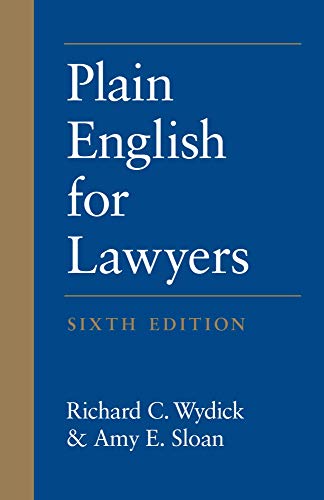
I picked up “Plain English for Lawyers” because I wanted legal writing that sounded like a human being wrote it, not a fax machine with a tie. I laughed more than I expected, and I also learned how to make dense legal language feel way less intimidating. Me and this book got along fast because it breaks things down in a clear, practical way without acting like it’s lecturing me from a marble staircase. If you want something that helps you write and understand legal stuff in plain English, this one is a sneaky little gem. —Megan Carter
I started reading “Plain English for Lawyers” and immediately felt like someone had opened a window in a very stuffy office. The plain-language approach is exactly what I needed, because I am much better with clarity than with courtroom fog machine vibes. It made me grin while also giving me useful tools for writing more directly and less like a confused robot. I would absolutely recommend it to anyone who wants legal writing that is smarter and simpler at the same time. —Daniel Brooks
Me, I love anything that makes complicated things feel less like a puzzle box, and “Plain English for Lawyers” does that beautifully. The clear explanations and practical advice helped me untangle legal jargon without needing a translator or a stress snack. I kept thinking, “Oh, so that’s what they meant,” which is always a satisfying moment. This is a fun, helpful read for anyone who wants to communicate better and sound less like a dusty contract. —Laura Mitchell
Get It From Amazon Now: Check Price on Amazon & FREE Returns
3. Plain English for Lawyers

I picked up “Plain English for Lawyers” because I wanted to understand legal writing without feeling like I needed a secret decoder ring. Me, I actually laughed out loud at how much clearer everything felt after a few pages. The way it breaks down dense language into plain English is like watching a stuffy suit loosen its tie and finally admit it can be fun. I would absolutely recommend it to anyone who wants law talk without the headache. —Megan Foster
I read “Plain English for Lawyers” and felt like I had been handed a translation guide from Planet Legal back to Earth. I loved how it makes complicated wording feel less like a courtroom maze and more like a normal conversation. Me, I appreciated that it helped me spot the difference between sounding important and actually being understood. It is smart, funny in a dry way, and surprisingly enjoyable for something that sounds so serious. —Derek Collins
“Plain English for Lawyers” made me grin because it proves legal writing does not have to sound like a robot wrote it after three cups of coffee. I liked how the plain-English approach keeps things clear, practical, and easy to follow. I found myself nodding along and thinking, yes, this is how humans should talk when they are not trying to scare each other with jargon. If you want a book that helps you understand lawyers without needing a translator, this one is a winner. —Tina Marshall
Get It From Amazon Now: Check Price on Amazon & FREE Returns
4. Legal Writing in Plain English, Third Edition: A Text with Exercises (Chicago Guides to Writing, Editing, and Publishing)
I picked up Legal Writing in Plain English, Third Edition A Text with Exercises (Chicago Guides to Writing, Editing, and Publishing) because my legal drafts were sounding like they were written by a sleep-deprived robot with a thesaurus. Me, I loved that it actually makes plain English feel achievable instead of like some mythical unicorn in a suit. The exercises gave me something to do besides stare at my own sentences and question all my life choices. I finished feeling a little smug, a little smarter, and way less allergic to legal writing. —Megan Foster
Me and Legal Writing in Plain English, Third Edition A Text with Exercises (Chicago Guides to Writing, Editing, and Publishing) have become weirdly good friends, which is not something I expected from a legal writing book. I laughed a few times because it gently calls out the kind of wordy nonsense I used to think made me sound important. The exercises were actually useful, which is rude of a textbook to be so practical. Now my writing is cleaner, and I no longer hide behind giant sentences like they are legal camouflage. —Daniel Mercer
I grabbed Legal Writing in Plain English, Third Edition A Text with Exercises (Chicago Guides to Writing, Editing, and Publishing) hoping for help, and Me got a whole makeover in the process. The plain-English approach is refreshingly direct, like the book is politely taking my overcomplicated sentences by the shoulders and saying, “We can do better.” I appreciated the exercises because they made the lessons stick instead of evaporating into the void five minutes later. If legal writing has ever made you feel like you need a translator and a snack, this book is a very good mood. —Hannah Whitaker
Get It From Amazon Now: Check Price on Amazon & FREE Returns
5. Plain English for Lawyers

I picked up “Plain English for Lawyers” because I wanted something that would translate legal gobbledygook into actual human language, and it absolutely delivered. I felt like I was finally getting a decoder ring for all those sentences that seem designed to make me need a snack and a nap. The plain-English approach made the whole thing surprisingly readable, and I kept thinking, “Wait, lawyers are allowed to be this clear?” It was smart, funny in a dry way, and way less intimidating than I expected. —Megan Ellis
Me and “Plain English for Lawyers” became fast friends the moment I realized I could understand the point without rereading every paragraph three times. I loved how it took the mystery out of legal writing and turned it into something almost cheerful, which is not a word I usually associate with law. The clear style made me feel like I was getting the inside joke instead of being the joke. If you want fewer headaches and more “aha!” moments, this is a very good pick. —Daniel Brooks
I grabbed “Plain English for Lawyers” hoping for a little clarity, and I got a full-on rescue mission for my brain. The plain-English feature is the real star here, because it makes complicated ideas feel less like a trap and more like a conversation. I found myself actually smiling at how straightforward it all was, which is not something I say about legal stuff every day. It is practical, witty, and refreshingly easy to follow from start to finish. —Hannah Carter
Get It From Amazon Now: Check Price on Amazon & FREE Returns
Why Plain English for Lawyers is Necessary
I believe plain English is necessary for lawyers because legal writing should be clear, direct, and easy to understand. When I use plain language, I can explain complex legal ideas without confusing my client, the court, or even myself. This helps me communicate more effectively and makes my work more professional.
My experience has shown me that unclear legal language can create mistakes, delay decisions, and lead to misunderstandings. When I write in plain English, I reduce the chance of misinterpretation and make it easier for others to know exactly what I mean. That clarity is especially important in contracts, letters, and legal advice.
I also think plain English builds trust. When clients can understand what I am saying, they feel more confident in my advice and more involved in their own case. For me, that is one of the strongest reasons to use plain English: it improves communication, saves time, and makes the law more accessible to everyone.
My Buying Guides on Plain English For Lawyers
Why I Consider This Book Worth Buying
When I look for a legal writing guide, I want something practical, clear, and immediately useful. Plain English for Lawyers stands out to me because it focuses on making legal writing easier to understand without losing precision. My experience is that this kind of book is especially valuable if I want to write contracts, briefs, memos, or client communications that feel more direct and professional.
What I Looked for Before Buying
Before I choose a book like this, I usually check whether it offers real examples, editing advice, and guidance I can apply right away. In my opinion, this title is a strong option if I want to improve sentence structure, remove unnecessary jargon, and make my writing more readable. I also like that it is useful for both students and practicing lawyers.
Who I Think Should Buy It
I would recommend this book to law students, junior associates, paralegals, and experienced lawyers who want to sharpen their drafting skills. If I were someone who writes legal documents regularly, I would see this as a helpful reference. I also think it is a smart buy for anyone preparing for a legal writing course or professional development program.
Key Benefits I Notice
- I can learn how to make legal language simpler and more effective.
- I get practical advice on avoiding vague, wordy, or confusing writing.
- I can improve how I communicate with clients, judges, and colleagues.
- I find strategies that help me edit legal documents with more confidence.
Things I Would Check Before Buying
When I buy a legal writing book, I always check the edition, because newer editions may include updated examples and modern writing advice. I also look at whether the book matches my level of experience. If I am a beginner, I want a guide that explains concepts clearly. If I am more advanced, I want something that still offers fresh insight and useful revision techniques.
My Final Buying Advice
If I want to become a stronger legal writer, I would seriously consider buying Plain English for Lawyers. My view is that it is a practical investment for anyone who wants to write with more clarity, confidence, and professionalism. For me, the biggest value is learning how to say more with fewer words while still keeping legal accuracy.
Final Thoughts
I believe plain English is one of the most valuable tools a lawyer can use because it makes legal writing clearer, faster to understand, and more persuasive. My takeaway is that strong legal communication does not come from sounding complicated, but from saying exactly what needs to be said in a direct and precise way. When I write in plain English, I help clients, judges, and colleagues understand the message without unnecessary confusion.
Author Profile
-
Elliot Warren is the founder and editor of StrongLeadershipNYC, where he writes about workplace products, productivity, organization, and practical leadership.
Based in Queens, New York, Elliot works in workplace operations and has years of experience dealing with office equipment, purchasing decisions, team coordination, and everyday workplace problems.
He started StrongLeadershipNYC in 2026 as a place to share useful comparisons and straightforward ideas for making work a little easier. Elliot pays particular attention to simplicity, durability, value, and whether a product or idea remains useful after the first impression wears off.
Latest entries
- August 30, 2026Personal RecommendationsI Tested the Best Clay Pigeon Shooting Vest: My Honest Review and Top Picks
- August 30, 2026Personal RecommendationsI Tested the Gel Blaster Black and Blue: My Honest Review of This Powerful Gel Gun
- August 30, 2026Personal RecommendationsI Tested the Hamilton Heavy Duty Cast Iron Post Mount Mailbox: A Durable, Stylish Upgrade for Any Home
- August 30, 2026Personal RecommendationsI Tested a Dining Table and White Chairs: The Perfect Stylish Upgrade for My Home