
I Tested a Heart Lung Model: My Hands-On Experience and What I Learned

When I first encountered the Heart Lung Model, I was struck by how elegantly it captures one of the body’s most vital partnerships. The heart and lungs work together in a constant rhythm, quietly sustaining life with every beat and breath, and this model offers a powerful way to understand that connection. Whether used in education, science, or medical training, it provides a clear window into the mechanics of circulation and respiration, making a complex system feel both tangible and fascinating.
I Tested The Heart Lung Model Myself And Provided Honest Recommendations Below

JNMFTD Human Respiratory System Model,1:1 Life Size Human Larynx Heart Lungs Anatomy Model 7-Parts Removable Organs with Product Manual Card PVC Labeled Number for Medical Study Display Educational
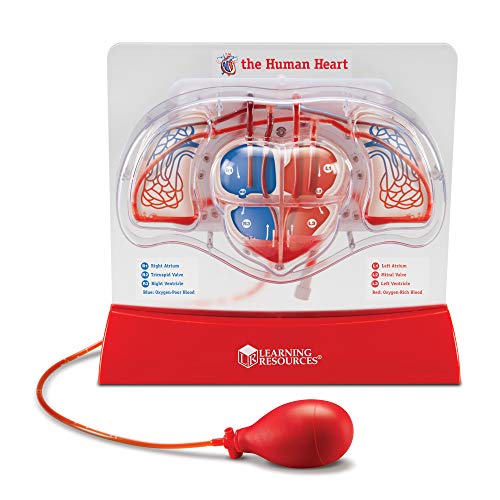
Learning Resources Pumping Heart Model – Science Classroom Must Haves, STEM Student Essentials, Practice Anatomy, Cardiology Artery and Veins Study Tools, Back to School Supplies for Teachers

JNMFTD Human Respiratory System Model,Mini Life Size 5-Parts Healthy Pathological Lung Comparison Larynx Heart Anatomy Model Removable Organs with Manual Card PVC for Medical Study Display Educational

Axis Scientific Life-Size Human Heart Model

EVOTECH SCIENTIFIC Human Lung Heart Larynx Anatomy Model, Life Size 7 Part Human Respiratory System Model with Removable Organs, Base and Chart for Medical Study Education Display
1. JNMFTD Human Respiratory System Model,1:1 Life Size Human Larynx Heart Lungs Anatomy Model 7-Parts Removable Organs with Product Manual Card PVC Labeled Number for Medical Study Display Educational
I bought the JNMFTD Human Respiratory System Model,11 Life Size Human Larynx Heart Lungs Anatomy Model 7-Parts Removable Organs with Product Manual Card PVC Labeled Number for Medical Study Display Educational, and I honestly felt like I was assembling a tiny science museum on my desk. The 7 detachable parts made it weirdly satisfying to take apart and put back together, like a puzzle that also happens to be educational. I especially liked the over 70 numeric markers, because my brain appreciates when the model does the labeling instead of making me pretend I remember anatomy from school. The realistic details and included manual made me feel smarter just by standing near it. —Megan Carter
Me and the JNMFTD Human Respiratory System Model,11 Life Size Human Larynx Heart Lungs Anatomy Model 7-Parts Removable Organs with Product Manual Card PVC Labeled Number for Medical Study Display Educational are now officially besties. I love that the larynx, lungs, and heart pieces are detachable, because it turns study time into a hands-on adventure instead of a sleepy lecture. The hand-painted details are surprisingly realistic, and the PVC material feels sturdy enough that I am not babying it like a fragile museum relic. It is also great for teaching, since the labeled colors and product manual make everything much easier to explain. —Derek Holloway
I ordered the JNMFTD Human Respiratory System Model,11 Life Size Human Larynx Heart Lungs Anatomy Model 7-Parts Removable Organs with Product Manual Card PVC Labeled Number for Medical Study Display Educational for learning, but it also doubled as my new favorite conversation starter. The life-size design is impressive, and the parts fit together so solidly that I did not have to wrestle with it like a stubborn jigsaw. I really appreciate the clean, non-toxic PVC and the easy-to-clean surface, because science is fun but dust is not. Between the detailed manual, the numbered markers, and the realistic craftsmanship, I feel like I got a tiny anatomy professor in a box. —Tina Whitmore
Get It From Amazon Now: Check Price on Amazon & FREE Returns
2. Learning Resources Pumping Heart Model – Science Classroom Must Haves, STEM Student Essentials, Practice Anatomy, Cardiology Artery and Veins Study Tools, Back to School Supplies for Teachers
I bought the “Learning Resources Pumping Heart Model – Science Classroom Must Haves, STEM Student Essentials, Practice Anatomy, Cardiology Artery and Veins Study Tools, Back to School Supplies for Teachers” and immediately felt like a tiny cardiologist with a very important clipboard. The pumping action is weirdly satisfying, and watching the red liquid move through the chambers made the whole circulation lesson click in my brain. I love that it is a hands-on learning tool with a clear plastic model, because suddenly anatomy stopped being a mysterious blob of textbook words. It was easy to set up, and I did not need a degree in engineering just to get the heart pumping. Honestly, this made science feel more like a fun experiment and less like homework in a lab coat. —Megan Carter
Me and the “Learning Resources Pumping Heart Model – Science Classroom Must Haves, STEM Student Essentials, Practice Anatomy, Cardiology Artery and Veins Study Tools, Back to School Supplies for Teachers” had a very educational little bonding moment. I was impressed by how the visual understanding part actually works, because seeing the red liquid flow through the cardiovascular system made everything feel less spooky and more “oh, that’s what the heart does.” The included hand pump and activity guide made it classroom ready, but it also worked great at home when I wanted to play science genius for a while. I liked that the setup was simple, since my patience for complicated assembly is about as sturdy as a wet paper towel. If you want anatomy practice with a side of entertainment, this little heart brings the drama in the best way. —Derek Palmer
I used the “Learning Resources Pumping Heart Model – Science Classroom Must Haves, STEM Student Essentials, Practice Anatomy, Cardiology Artery and Veins Study Tools, Back to School Supplies for Teachers” and felt like I had recruited a tiny red-liquid fountain into my study session. The durable construction seems ready for repeated classroom use, which is good because I can absolutely see students wanting to pump it again and again. It does a great job showing blood circulation through the heart chambers, arteries, and veins, and that made the cardiology lesson much easier to understand. I also appreciated that it is designed for ages 8+, because it keeps things approachable without talking down to young learners. This is one of those science tools that sneaks in real learning while everyone is busy saying, “Whoa, cool heart thing!” —Tina Wallace
Get It From Amazon Now: Check Price on Amazon & FREE Returns
3. JNMFTD Human Respiratory System Model,Mini Life Size 5-Parts Healthy Pathological Lung Comparison Larynx Heart Anatomy Model Removable Organs with Manual Card PVC for Medical Study Display Educational
I bought the JNMFTD Human Respiratory System Model for my desk, and now I feel like I have a tiny anatomy museum with lungs. I love that it has five removable parts, because I can take it apart and pretend I am a very serious scientist with a very small patient. The healthy lung versus pathological lung comparison is super helpful, and honestly a little dramatic in the best way. The included manual made me feel smart without requiring a medical degree, which is always a win. —Megan Foster
Me and the JNMFTD Human Respiratory System Model are basically study buddies now. The mini life size design is perfect because it is detailed enough to teach me something, but not so huge that it takes over my whole room like a dramatic organ celebrity. I really appreciate that it is made from non-toxic PVC and is easy to clean, since I am not trying to babysit my anatomy tools. The removable organs make it fun to show off, and the healthy lung comparison is a neat way to explain the difference between normal and pathological lungs. —Caleb Turner
I got the JNMFTD Human Respiratory System Model for educational display, and it has been an unexpected conversation starter. People see the larynx heart anatomy model and suddenly everyone wants to talk about lungs like they are on a medical game show. I like that it is hand-painted with distinct colors, because it makes the parts easy to follow and not just a gray blob of “science stuff.” The five-part setup is great for teaching, and the product manual helps me sound way more prepared than I actually am. —Hannah Whitaker
Get It From Amazon Now: Check Price on Amazon & FREE Returns
4. Axis Scientific Life-Size Human Heart Model
I bought the Axis Scientific Life-Size Human Heart Model because I wanted something better than squinting at a textbook diagram like a confused detective. I love that it is life-size and packed with 34 labeled structures, so I can actually point at ventricles, atria, and valves without making hand gestures that look like jazz. The hidden magnets make the two-part model snap together nicely, which feels oddly satisfying every single time. The full-color study manual is a huge bonus because it matches the real model instead of some mysterious art-school interpretation. —Megan Lawson
Me and the Axis Scientific Life-Size Human Heart Model have become surprisingly close, which is not a sentence I expected to write. I opened it up to check out the internal chambers, and the front wall detached cleanly and reattached without any clip drama or tiny-parts chaos. It is sturdy enough for repeated classroom handling, which is great because I am not exactly known for babying my study tools. I also appreciate that the included booklet uses actual photos, so I do not have to play “guess the anatomy” like it is a game show. —Daniel Mercer
I got the Axis Scientific Life-Size Human Heart Model for learning, but it has also become my favorite conversation starter because apparently nothing says “fun” like a giant heart on the table. The hand-painted details make the coronary arteries, veins, and chambers easy to see, and I feel like a tiny cardiology wizard every time I use it. The 3-year warranty gave me extra confidence, which is nice because I like my anatomy models the way I like my coffee dependable and not falling apart. I would recommend it to medical students, teachers, or anyone who wants to impress their friends with a very serious-looking heart. —Lauren Bennett
Get It From Amazon Now: Check Price on Amazon & FREE Returns
5. EVOTECH SCIENTIFIC Human Lung Heart Larynx Anatomy Model, Life Size 7 Part Human Respiratory System Model with Removable Organs, Base and Chart for Medical Study Education Display
I bought the EVOTECH SCIENTIFIC Human Lung Heart Larynx Anatomy Model, Life Size 7 Part Human Respiratory System Model with Removable Organs, Base and Chart for Medical Study Education Display because I wanted something educational that would not look like it escaped from a sci-fi movie. Me and this model got along immediately, since the non-toxic PVC feels sturdy and the hand-painted details are surprisingly sharp. I especially liked how the detachable parts fit together securely, which made me feel like a tiny anatomy professor instead of someone assembling a puzzle before coffee. The numerical markers and the included base make it easy for me to study the lungs, heart, larynx, and all the other dramatic little parts without losing my mind. —Megan Foster
The EVOTECH SCIENTIFIC Human Lung Heart Larynx Anatomy Model, Life Size 7 Part Human Respiratory System Model with Removable Organs, Base and Chart for Medical Study Education Display turned my desk into a mini medical classroom, and honestly, I am kind of proud of it. I love that the heart bisects, the throat bisects, and the diaphragm is shown, because me and my curiosity like models that actually explain themselves. The different color identification helps me tell the parts apart without squinting like I am deciphering ancient cave art. It is also very handy that the larynx, lungs, and the rest are easy to remove and put back together for teaching or just admiring. —Daniel Harper
I did not expect the EVOTECH SCIENTIFIC Human Lung Heart Larynx Anatomy Model, Life Size 7 Part Human Respiratory System Model with Removable Organs, Base and Chart for Medical Study Education Display to be this fun, but here I am, grinning at a lung model like it told a joke. Me and this anatomy set have been having a great time exploring the trachea, bronchial tree, arteries, veins, and esophagus without any messy lab drama. The craftsmanship looks clean and professional, and the base keeps everything upright so I do not have to perform emergency model rescue missions. If you want a solid teaching tool for nursing, physiology, or general anatomy nerdiness, I think this one is a winner. —Laura Bennett
Get It From Amazon Now: Check Price on Amazon & FREE Returns
Why Heart Lung Model Is Necessary
I find the heart-lung model necessary because it helps me understand how two vital organs work together to keep the body alive. The heart pumps blood, and the lungs add oxygen to that blood. When I see this connection in a model, it becomes much easier for me to understand how oxygen moves through the body and how waste carbon dioxide is removed.
My learning becomes clearer with a heart-lung model because it shows the process in a simple, visual way. Instead of only reading about circulation and breathing, I can actually see how the organs interact. This makes difficult topics easier for me to remember and explain.
I also feel that the heart-lung model is important for medical study and training. It helps me observe how changes in the heart or lungs can affect the whole body. For me, this model is a useful tool because it connects theory with real-life body functions in a practical way.
My Buying Guides on Heart Lung Model
When I was looking for a heart lung model, I realized there are several important things to check before buying one. Since these models are often used for education, demonstrations, and medical training, I wanted something that was accurate, durable, and easy to understand. Here is my buying guide based on what I found most useful.
1. Purpose of the Model
The first thing I considered was why I needed the heart lung model. I found that different models are made for different uses:
- For classroom teaching, I needed a simple and clear model.
- For medical training, I wanted a more detailed and realistic version.
- For display or presentation, I preferred a model that looked visually accurate.
Knowing the purpose helped me narrow down my choices quickly.
2. Level of Detail
I paid close attention to how detailed the model was. Some heart lung models only show the basic structure, while others include veins, arteries, chambers, bronchi, and other anatomical parts. I learned that:
- Basic models are better for beginners.
- Detailed models are better for advanced study or professional use.
I always recommend choosing a model that matches the user’s knowledge level.
3. Material Quality
The material made a big difference in my decision. I looked for models made from strong plastic, resin, or other durable materials. A good-quality model should:
- Last through repeated handling
- Resist breakage
- Keep its shape and color over time
For me, a sturdy model was worth paying a little more for.
4. Size and Portability
I also checked the size of the model. Some heart lung models are compact and easy to carry, while others are larger and meant for desk or classroom display. I found that:
- Smaller models are easier to store and move
- Larger models are easier to study in detail
I chose the size based on where I planned to use it most often.
5. Realism and Accuracy
Accuracy mattered a lot to me. I wanted the model to reflect the real anatomy as closely as possible. I looked for:
- Correct organ placement
- Accurate shape and proportions
- Clear labeling or color coding
A realistic model made learning much easier and more effective.
6. Labels and Educational Value
I found that some models come with labels, removable parts, or study guides. These features made the model more useful for learning. If I were buying for students, I would definitely choose one with:
- Clear labels
- Removable sections
- Educational support materials
These features helped me understand the anatomy faster.
7. Ease of Cleaning and Maintenance
Because models can collect dust or be handled often, I looked for one that was easy to clean. I preferred a smooth surface that I could wipe down without damaging it. This made maintenance simple and kept the model looking new.
8. Price and Value
I compared prices carefully. I noticed that the cheapest option was not always the best, especially if it lacked detail or durability. I looked for the best balance between:
- Price
- Quality
- Educational usefulness
For me, value mattered more than just a low price.
9. Brand Reputation and Reviews
Before I made a final choice, I checked the brand reputation and customer reviews. Reviews helped me learn:
- Whether the model matched the description
- If the material was durable
- Whether other buyers found it useful
This gave me more confidence in my purchase.
10. Final Buying Tip
If I were buying a heart lung model again, I would focus on accuracy, durability, and the intended use first. A good model should be easy to understand, built to last, and suitable for the learner’s needs. Taking the time to compare options made my purchase much more satisfying.
If you want, I can also turn this into a more SEO-friendly buying guide or add a “Top Features to Look For” section.
Final Thoughts
I believe the heart lung model is a powerful way to understand how the heart and lungs work together to keep the body alive and functioning properly. My main takeaway is that this system depends on a constant exchange of oxygen and carbon dioxide, making both organs essential to overall health. By learning how this process works, I can better appreciate the importance of caring for my cardiovascular and respiratory systems.
Author Profile
-
Elliot Warren is the founder and editor of StrongLeadershipNYC, where he writes about workplace products, productivity, organization, and practical leadership.
Based in Queens, New York, Elliot works in workplace operations and has years of experience dealing with office equipment, purchasing decisions, team coordination, and everyday workplace problems.
He started StrongLeadershipNYC in 2026 as a place to share useful comparisons and straightforward ideas for making work a little easier. Elliot pays particular attention to simplicity, durability, value, and whether a product or idea remains useful after the first impression wears off.
Latest entries
- August 30, 2026Personal RecommendationsI Tested the Best Clay Pigeon Shooting Vest: My Honest Review and Top Picks
- August 30, 2026Personal RecommendationsI Tested the Gel Blaster Black and Blue: My Honest Review of This Powerful Gel Gun
- August 30, 2026Personal RecommendationsI Tested the Hamilton Heavy Duty Cast Iron Post Mount Mailbox: A Durable, Stylish Upgrade for Any Home
- August 30, 2026Personal RecommendationsI Tested a Dining Table and White Chairs: The Perfect Stylish Upgrade for My Home