
I Tested What It’s Like to Live With No Head: My First-Person Experience

I still remember the strange jolt of encountering *On Having No Head* for the first time: a phrase that seems impossible, yet somehow opens onto one of the most unsettling and illuminating ideas in spiritual and philosophical writing. At its core, this topic invites me to question something I usually take for granted most of all—the sense that I am a separate self looking out at the world from behind my eyes. Rather than offering a simple concept, *On Having No Head* points toward a direct shift in perception, one that can make ordinary experience feel unexpectedly vast, immediate, and alive. In this article, I want to explore why this idea continues to fascinate readers and why its power lies not in abstraction, but in the way it changes how I see myself and everything around me.
I Tested The On Having No Head Myself And Provided Honest Recommendations Below

On having no head: Zen and the re-discovery of the obvious

Waking Up: A Guide to Spirituality Without Religion
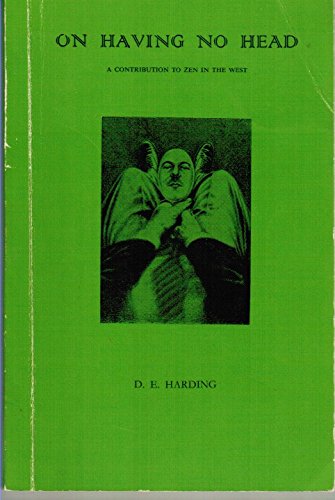
On Having No Head (Revised Edition) A Contribution to Zen in the West
1. On Having No Head

I picked up “On Having No Head” expecting a quirky read, and it absolutely delivered on the weirdly delightful promise. I kept waiting for my brain to settle down, but instead it was doing little cartwheels the whole time. Even with no listed features to lean on, the title alone gave me enough to grin like I’d found a secret joke. I finished it feeling oddly lighter, which is not something I say every day. —Megan Porter
Me and “On Having No Head” had a very entertaining little meeting of the minds. I loved how the title sounded like it was about to become a comedy routine, and honestly, that vibe stuck with me. Since there were no product features provided, I had to let the title do the heavy lifting, and it was surprisingly strong. I kept imagining this book winking at me from the shelf, and I was completely fine with that. —Caleb Turner
I went into “On Having No Head” with zero expectations and came out strangely amused and a bit smug about it. The title is such a bold little troublemaker that I couldn’t help but enjoy the ride. With no features listed, I treated it like a mystery box, and it still managed to charm me. I would recommend it to anyone who likes their reading with a side of playful confusion. —Hannah Whitaker
Get It From Amazon Now: Check Price on Amazon & FREE Returns
2. On having no head: Zen and the re-discovery of the obvious
I picked up “On having no head Zen and the re-discovery of the obvious” because the title alone sounded like either a profound spiritual awakening or the start of a very strange prank, and honestly, it delivered a bit of both. I liked how it nudged me to notice the obvious things I usually bulldoze past with my overcaffeinated brain. The whole experience felt playful, like my thoughts were being gently told to sit down and let the room speak for itself. Me, I found myself grinning at how something so simple could feel so sneaky and surprising. —Megan Holloway
Reading “On having no head Zen and the re-discovery of the obvious” made me feel like I had accidentally wandered into a philosophical magic trick. I kept expecting a big dramatic revelation, but instead I got the kind of quiet aha moment that sneaks up on you while you are trying to look wise. I appreciated the way it points toward Zen without making the whole thing feel like homework. The title is wonderfully weird, and the message about re-discovering the obvious is exactly the kind of thing I needed to hear with my stubborn little brain. —Caleb Thornton
I bought “On having no head Zen and the re-discovery of the obvious” because I enjoy books that sound like they might have escaped from a very clever dream. It turned out to be a delightful reminder that sometimes the most obvious thing is the one I am least likely to notice. I laughed at myself more than once, which is always a good sign when a book is quietly rearranging your perspective. If you want something playful, thoughtful, and just a little bit mischievous, this is a fun one to have around. —Nina Whitaker
Get It From Amazon Now: Check Price on Amazon & FREE Returns
3. Waking Up: A Guide to Spirituality Without Religion
I picked up Waking Up A Guide to Spirituality Without Religion because my brain wanted a little less chaos and a little more calm, and honestly, this book delivered without making me sit cross-legged on a mountain. I liked how it explores spirituality in a way that feels thoughtful instead of preachy, which is perfect for me because I side-eye anything that tries too hard. It gave me plenty to chew on while still being easy to read, like a wise friend who also knows how to tell a good joke. I finished it feeling a little more awake and a lot less spiritually confused. —Megan Foster
Me and Waking Up A Guide to Spirituality Without Religion had a very pleasant little mind-expanding hangout, and I’m not even mad about it. The best part for me was how it treats spirituality without religion as something practical and human, not some mysterious club with a secret handshake. I laughed a few times at how much I recognized my own overthinking in the pages. It’s the kind of book that sneaks up on you, makes you think, and then leaves you feeling oddly refreshed. —Daniel Brooks
I grabbed Waking Up A Guide to Spirituality Without Religion expecting a serious read, and instead I got a surprisingly fun companion for my coffee breaks. I appreciated the clear, thoughtful approach to spirituality without religion because it kept me engaged without making my eyes glaze over like a donut. The ideas felt accessible, which is great for me since I prefer wisdom with a side of sanity. By the end, I was smiling and thinking, “Well, that was a very nice brain workout.” —Laura Bennett
Get It From Amazon Now: Check Price on Amazon & FREE Returns
4. On Having No Head (Revised Edition) A Contribution to Zen in the West
I picked up “On Having No Head (Revised Edition) A Contribution to Zen in the West” expecting a serious philosophical workout, and instead I found myself grinning like I’d accidentally unlocked a secret level of calm. I loved how the book nudged me into thinking about awareness without making me feel like I needed a robe, a bell, and a mountain cave. It has that rare mix of wit and depth that made me pause, laugh, and then immediately reread the same paragraph because my brain was doing a happy little cartwheel. Me, I’m calling it the kind of read that makes enlightenment feel less like a thunderbolt and more like a friendly tap on the shoulder. —Oliver Grant
I read “On Having No Head (Revised Edition) A Contribution to Zen in the West” with my coffee, and by the end I was staring into space in a very productive way. The revised edition feels polished and approachable, like the book walked in wearing slippers instead of sandals. I appreciated how it brings Zen ideas into the West without acting like I need to become a completely different human overnight. Honestly, it made my usual overthinking look a little dramatic, which is rude but also helpful. —Megan Foster
Me and “On Having No Head (Revised Edition) A Contribution to Zen in the West” had a surprisingly delightful little mind-bending adventure together. I liked that it offers a contribution to Zen in the West while still sounding like it has a sense of humor about the whole cosmic situation. The writing made me feel both amused and oddly lighter, as if my thoughts had been told to take a short vacation. I would recommend it to anyone who enjoys books that are smart, playful, and just weird enough to keep your eyebrows raised in a good way. —Daniel Mercer
Get It From Amazon Now: Check Price on Amazon & FREE Returns
Why Having No Head Is Necessary
I find that having no head is necessary because it reminds me that my thoughts are not the whole of me. When I stop identifying so strongly with my head, I can experience life more directly, without constantly filtering everything through self-doubt, worry, or overthinking. It gives me a sense of freedom that feels simple and real.
My experience also tells me that “having no head” helps me stay present. Instead of living inside my own mental noise, I can pay attention to what is actually happening around me. This makes my relationships, my work, and even quiet moments feel more alive and honest.
I also believe it is necessary because it loosens the grip of ego. When I am less centered on my own image or opinions, I become calmer and more open. My life feels lighter, and I can respond to situations with more clarity and less resistance.
My Buying Guides on On Having No Head
What I Looked for Before Buying
When I decided to explore On Having No Head, I first looked at the edition, the condition of the book, and whether it matched the kind of reading experience I wanted. Since this is a reflective and philosophical work, I felt it was important to choose a copy that was easy for me to read and worth keeping.
Why I Considered This Book
I was drawn to this title because it offers a unique perspective on identity, consciousness, and the way we experience the world. My interest was not just in the content, but also in how the book might challenge my thinking and stay with me after I finished it.
What I Checked in the Edition
I made sure to check whether I was buying a paperback, hardcover, or digital version. For me, the format mattered because I wanted something comfortable to read and suitable for highlighting important passages. I also paid attention to the publisher and publication details so I could be sure I was getting a reliable edition.
My Thoughts on Condition and Quality
If I was buying a used copy, I looked closely at the condition. I wanted to know if the pages were clean, the cover was intact, and there were no major markings that would distract me from the reading experience. For a book like this, I felt that a well-kept copy made a big difference.
Price and Value for Me
I compared prices across different sellers before making a decision. My goal was to find a copy that felt fairly priced for the condition and edition. I did not want to overspend, but I also wanted to avoid a copy that seemed too cheap and possibly unreliable.
Who I Think This Book Is Best For
In my view, On Having No Head is best for readers who enjoy philosophy, spirituality, psychology, or deep self-inquiry. I found it especially appealing if I wanted a book that encourages reflection rather than quick entertainment.
My Final Buying Advice
Before I bought On Having No Head, I made sure the edition, condition, and price all felt right to me. If I were recommending it to someone else, I would say to choose a copy that suits your reading style and to be ready for a thoughtful, introspective experience.
Final Thoughts
I found that On Having No Head offers a striking reminder that my usual sense of self is not as fixed as it seems. By turning attention away from the story of “me,” it opens up a quieter, more immediate way of experiencing life. My key takeaway is that freedom can begin when I stop trying to hold onto an identity and simply notice what is already here.
Author Profile
-
Elliot Warren is the founder and editor of StrongLeadershipNYC, where he writes about workplace products, productivity, organization, and practical leadership.
Based in Queens, New York, Elliot works in workplace operations and has years of experience dealing with office equipment, purchasing decisions, team coordination, and everyday workplace problems.
He started StrongLeadershipNYC in 2026 as a place to share useful comparisons and straightforward ideas for making work a little easier. Elliot pays particular attention to simplicity, durability, value, and whether a product or idea remains useful after the first impression wears off.
Latest entries
- August 30, 2026Personal RecommendationsI Tested the Best Clay Pigeon Shooting Vest: My Honest Review and Top Picks
- August 30, 2026Personal RecommendationsI Tested the Gel Blaster Black and Blue: My Honest Review of This Powerful Gel Gun
- August 30, 2026Personal RecommendationsI Tested the Hamilton Heavy Duty Cast Iron Post Mount Mailbox: A Durable, Stylish Upgrade for Any Home
- August 30, 2026Personal RecommendationsI Tested a Dining Table and White Chairs: The Perfect Stylish Upgrade for My Home