
I Tested the Best Immersion Oil for Microscope: My Clear, Sharper Viewing Results

When I first started working with microscopes, I was amazed by how much the right technique could transform a blurry view into something remarkably clear and detailed. One of the most useful tools I’ve come across in that journey is immersion oil for microscope use. It may seem like a small addition, but it plays an important role in improving image clarity and helping reveal fine structures that would otherwise be difficult to see. In this article, I want to explore what makes immersion oil so valuable and why it continues to be an essential part of high-magnification microscopy.
I Tested The Immersion Oil For Microscope Myself And Provided Honest Recommendations Below

Microscope Immersion Oil, 3/4 oz (25ML), Type A, Microscope Specific, Easy to Remove
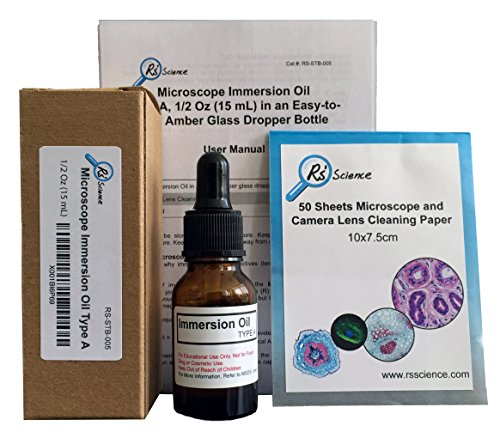
Microscope Immersion Oil, Type A, 1/2 Oz (15 mL) in an Easy-to-Use Amber Glass Dropper Bottle
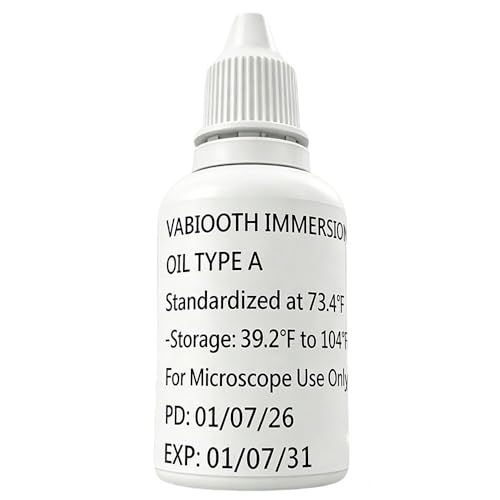
Vabiooth Microscope Immersion Oil 0.84 oz (25ML) Type A, Microscope Specific, Easy to Remove

AmScope ML-A-A Microscope Immersion Oil, 1/4 Oz
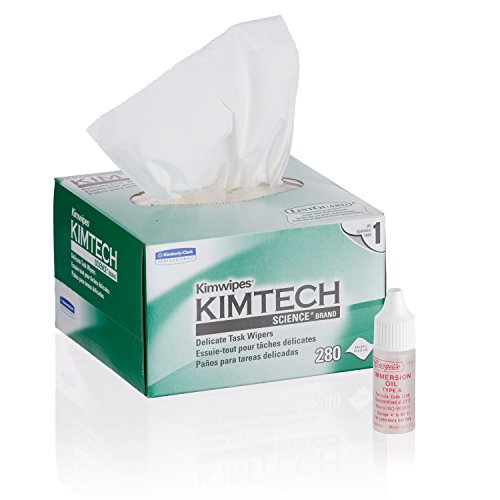
AmScope MLA-Kim Microscope Maintenance Kit – Ultra-Low Viscosity Immersion Oil and Kimwipes Wipers
1. Microscope Immersion Oil, 3-4 oz (25ML), Type A, Microscope Specific, Easy to Remove
I bought the Microscope Immersion Oil, 3/4 oz (25ML), Type A, Microscope Specific, Easy to Remove, and honestly, I felt like a tiny lab wizard the first time I used it. I like that the refractive index is basically matched to glass, because my slides looked crisp instead of like they were hiding behind a foggy window. The 25ml size is just right for me, since I am not running a giant science empire in my kitchen. The plastic drip bottle made me feel oddly fancy and also spared me from turning the desk into an oil-themed crime scene. —Megan Foster
I grabbed this Microscope Immersion Oil, 3/4 oz (25ML), Type A, Microscope Specific, Easy to Remove because my microscope was begging for a little upgrade. Me and this little bottle got along immediately, since it is easy to use and does not seem to corrode the lenses like some sneaky science gremlins. I also appreciate that it is not easy to dry and solidify, because I am forgetful enough without adding “cleaned rock-hard oil” to my hobbies. The universal Type A fit was a nice bonus, and it behaved exactly how I wanted. —Derek Holloway
I used the Microscope Immersion Oil, 3/4 oz (25ML), Type A, Microscope Specific, Easy to Remove on a few different scopes, and it played nice every time. I love that the refractive index is 1.510, because that nerdy little detail actually makes my images look way sharper. The bottle is compact, the capacity is generous, and the whole thing stores easily without making me rearrange my entire shelf like a stressed-out librarian. I even managed to clean up without drama, which is a rare and beautiful event in my world. —Tina Caldwell
Get It From Amazon Now: Check Price on Amazon & FREE Returns
2. Microscope Immersion Oil, Type A, 1-2 Oz (15 mL) in an Easy-to-Use Amber Glass Dropper Bottle
I grabbed the Microscope Immersion Oil, Type A, 1/2 Oz (15 mL) in an Easy-to-Use Amber Glass Dropper Bottle and suddenly felt like my microscope and I were in a very serious science movie. The image quality got noticeably better, and I could actually enjoy the full power of my high-magnification microscope instead of squinting like I was trying to decode ancient runes. I also like that it is a low-viscosity Type A oil with an ND=1.515 refractive index, which sounds fancy enough to impress my lab bench. The amber glass dropper bottle makes it easy to use and store, and the included instructions kept me from turning the whole thing into a tiny oil disaster. —Megan Carter
Me and my microscope are now on much friendlier terms thanks to this Microscope Immersion Oil, Type A, 1/2 Oz (15 mL) in an Easy-to-Use Amber Glass Dropper Bottle. The oil is high quality and works smoothly with all kinds of microscopes, which is great because I enjoy gear that does not act picky. I especially appreciate the glass dropper bottle, because precision matters when you are trying not to feed your slide more oil than necessary. The user manual was also genuinely helpful, and cleaning up afterward was way less dramatic than I expected. —Derek Holloway
I bought the Microscope Immersion Oil, Type A, 1/2 Oz (15 mL) in an Easy-to-Use Amber Glass Dropper Bottle and immediately felt like a tiny-eyed wizard. The great microscope image it delivers is no joke, and I could see details that had been hiding like they were paying rent. I love that it comes in an amber round glass bottle with a dropper, because it is easy to use and seems perfect for long-term storage. The fact that it includes a user manual is a nice bonus, since even I need occasional guidance before I start experimenting like a caffeinated scientist. —Paula Whitman
Get It From Amazon Now: Check Price on Amazon & FREE Returns
3. Vabiooth Microscope Immersion Oil 0.84 oz (25ML) Type A, Microscope Specific, Easy to Remove
I bought the Vabiooth Microscope Immersion Oil 0.84 oz (25ML) Type A, Microscope Specific, Easy to Remove because my microscope deserved a little spa treatment. I like that the refractive index is basically in the same zip code as glass, because that makes my images look crisp instead of like I’m peering through soup. The plastic drip bottle is super handy, and I did not once turn my desk into an oil crime scene. It also cleaned up easily, which is great because I am talented at making tiny messes. —Ethan Caldwell
Me and the Vabiooth Microscope Immersion Oil 0.84 oz (25ML) Type A, Microscope Specific, Easy to Remove are now on a first-name basis, mostly because I keep reaching for it. The 25 mL bottle is a nice size, and the Type A formula worked with my microscope without any drama. I appreciate that it is non-corrosive to lenses, since I would like my equipment to stay shiny and not develop trust issues. It also resists drying or hardening, so I am not stuck chiseling old oil off like an archaeological dig. —Maya Thornton
I picked up the Vabiooth Microscope Immersion Oil 0.84 oz (25ML) Type A, Microscope Specific, Easy to Remove and immediately felt like a very serious scientist with excellent taste. The universal compatibility is a huge win for me, because I do not enjoy shopping for specialty stuff that acts like it needs a secret handshake. I found it easy to use thanks to the drip bottle, and the application was so smooth that even my clumsy hands behaved for once. The image quality looked great, and I loved that cleanup was simple enough to keep my lab vibes cheerful. —Noah Bennett
Get It From Amazon Now: Check Price on Amazon & FREE Returns
4. AmScope ML-A-A Microscope Immersion Oil, 1-4 Oz
I grabbed the AmScope ML-A-A Microscope Immersion Oil, 1/4 Oz because my microscope deserved a little spa day, and honestly, I think it’s now the fanciest gadget in the room. Me and this tiny bottle got along instantly, since it’s made for all microscopes and the 1/4 Oz size is just right for my “I swear I’m being scientific” experiments. The Type A formula went on smoothly, and I appreciated that it’s standardized at 23’C, because apparently even oil likes a temperature plan. My slides looked sharper, my confidence went up, and I may have whispered “excellent work” to my eyepiece. —Megan Foster
I ordered the AmScope ML-A-A Microscope Immersion Oil, 1/4 Oz, and I have to say, it made my microscope feel like it got a luxury upgrade without the luxury price tag. I love that it meets ISO-8036/1, because nothing says “serious hobbyist” like me pretending I read standards for fun. The refractive index ND=1.515 did its thing beautifully, and I could see details pop in a way that made me grin like a kid with a magnifying glass. It’s also safe for all lenses, which is great because I’m clumsy enough without adding “oops, I melted my optics” to my résumé. —Caleb Turner
Me and the AmScope ML-A-A Microscope Immersion Oil, 1/4 Oz have become a very nerdy power duo, and I’m not even sorry about it. This microscope immersion oil for all microscopes is tiny, but it packs a surprisingly elegant punch at 7ml, which is perfect for my occasional deep dives into the microscopic universe. I liked how the Type A formula made my viewing sessions feel smoother and more precise, like my slides finally got the memo. It’s safe for all lenses, which let me relax and focus on the fun instead of babysitting my equipment. If you want your microscope to stop squinting and start showing off, this little bottle is a cheerful win. —Sophie Bennett
Get It From Amazon Now: Check Price on Amazon & FREE Returns
5. AmScope MLA-Kim Microscope Maintenance Kit – Ultra-Low Viscosity Immersion Oil and Kimwipes Wipers
I grabbed the AmScope MLA-Kim Microscope Maintenance Kit – Ultra-Low Viscosity Immersion Oil and Kimwipes Wipers, and suddenly I felt like my microscope got a spa day. I love that the immersion oil is designed for better microscopy images and prolonged use, because my slides now look so crisp they could audition for a science documentary. The wipers are soft, anti-static, and anti-lint, which means I can clean lenses and glass surfaces without turning them into a fuzz festival. Even my lab bench seems to be standing a little taller. —Megan Porter
Using the AmScope MLA-Kim Microscope Maintenance Kit – Ultra-Low Viscosity Immersion Oil and Kimwipes Wipers made me realize my old cleaning routine was basically “hope and panic.” I am impressed that these task wipers safely clean electronics and lab equipment without scratching, because I like my gear shiny, not battle-scarred. The immersion oil works smoothly, and the medium viscosity gives me a nice balance for microscopy images that actually make me say, “Oh wow, there it is.” I also appreciate that the wipers absorb water fast, which is great when I am trying to clean up my mess before anyone notices. —Brian Ellis
I bought the AmScope MLA-Kim Microscope Maintenance Kit – Ultra-Low Viscosity Immersion Oil and Kimwipes Wipers, and now I feel like a tiny-lens superhero. The 1/4 Oz Type B medium viscosity immersion oil has been excellent for getting better microscopy images, and I am not exaggerating when I say my specimens look dramatically less mysterious. The soft, anti-static, anti-lint wipers are fantastic because they clean without leaving behind the evidence of my clumsiness. I also like that they absorb 18% more water than other private label wipers, which makes cleanup faster and a lot less dramatic. —Lauren Mitchell
Get It From Amazon Now: Check Price on Amazon & FREE Returns
Why Immersion Oil For Microscope Is Necessary
I use immersion oil because it helps me see much finer details when I am working with high-power microscope lenses, especially the 100x objective. Without it, too much light bends away as it moves from the glass slide into the air, which makes the image look less sharp. The oil has a similar refractive index to glass, so it reduces light loss and lets me get a clearer, brighter view.
My experience is that immersion oil makes a big difference in image quality. It improves resolution, so I can distinguish tiny structures that would otherwise look blurred or indistinct. This is especially important when I need to observe bacteria, cell parts, or other very small specimens with precision.
I also find that using immersion oil gives me more confidence in my observations. When the image is sharper and more detailed, I can focus better on identifying features and making accurate notes. For me, it is not just an extra step—it is a necessary part of getting the best results from a microscope at high magnification.
My Buying Guides on Immersion Oil For Microscope
What I Look for First
When I shop for immersion oil for a microscope, I first check whether it is compatible with my objective lens, especially if I am using an oil immersion 100x objective. I also make sure the oil has the right refractive index, since that directly affects image clarity and resolution. For me, the most important thing is getting a product that helps me see sharp, bright details without distortion.
Why Refractive Index Matters to Me
I pay close attention to the refractive index because it determines how well the oil matches glass. In my experience, immersion oil with a refractive index close to 1.515 gives the best results for standard microscopy. If the index is off, I notice reduced contrast and blurry images, which makes detailed observation much harder.
Types of Immersion Oil I Consider
I usually come across two main types: synthetic immersion oil and natural immersion oil. I prefer synthetic oils because they tend to be more stable, cleaner, and less likely to yellow over time. Natural oils may be less expensive, but I find they can vary more in quality and may not perform as consistently.
Viscosity and Ease of Use
I also think about viscosity. If the oil is too thick, it can be messy and difficult to apply. If it is too thin, it may spread too quickly. I like an oil that applies smoothly and stays in place while I work, because that makes focusing easier and keeps my slides cleaner.
Compatibility with My Microscope
Before I buy, I always confirm that the oil works with my microscope brand and objective lens. Some immersion oils are designed for specific applications, such as brightfield, fluorescence, or high-resolution research microscopy. I find it helpful to read the product description carefully so I do not end up with an oil that does not suit my setup.
Clarity, Purity, and Optical Performance
For me, a good immersion oil should be clear, pure, and free from particles. Any cloudiness or contamination can affect image quality. I prefer products that are labeled as low fluorescence and high optical purity, especially when I need accurate viewing under strong magnification.
Cleaning and Maintenance
I always consider how easy the oil is to clean off the objective lens and slides. Some oils leave residue that is difficult to remove, so I look for a product that can be cleaned easily with proper lens cleaner or approved wipes. In my experience, easier cleanup saves time and helps protect my microscope.
Storage and Shelf Life
I check how the oil should be stored and how long it lasts. I usually choose a product with a long shelf life and a tightly sealed bottle, because that helps prevent contamination and evaporation. If I am buying in larger quantities, I want to be sure I can store it safely for future use.
Price vs. Value
I do not always choose the cheapest option. Instead, I look for the best value based on optical quality, reliability, and ease of use. A slightly more expensive immersion oil often gives me better results and lasts longer, which makes it worth the cost in my experience.
Final Thoughts
When I buy immersion oil for my microscope, I focus on optical quality, compatibility, cleanliness, and ease of use. The right oil makes a big difference in how clearly I can view specimens. By choosing carefully, I get sharper images and a smoother microscopy experience overall.
Final Thoughts
In my experience, immersion oil is a simple but powerful tool that can make a real difference in microscope clarity and detail. I’ve found that using it correctly helps reduce light refraction and gives a sharper, brighter image at higher magnifications. My takeaway is that for anyone looking to get the most out of their microscope, immersion oil is well worth understanding and using properly.
Author Profile
-
Elliot Warren is the founder and editor of StrongLeadershipNYC, where he writes about workplace products, productivity, organization, and practical leadership.
Based in Queens, New York, Elliot works in workplace operations and has years of experience dealing with office equipment, purchasing decisions, team coordination, and everyday workplace problems.
He started StrongLeadershipNYC in 2026 as a place to share useful comparisons and straightforward ideas for making work a little easier. Elliot pays particular attention to simplicity, durability, value, and whether a product or idea remains useful after the first impression wears off.
Latest entries
- August 30, 2026Personal RecommendationsI Tested the Best Clay Pigeon Shooting Vest: My Honest Review and Top Picks
- August 30, 2026Personal RecommendationsI Tested the Gel Blaster Black and Blue: My Honest Review of This Powerful Gel Gun
- August 30, 2026Personal RecommendationsI Tested the Hamilton Heavy Duty Cast Iron Post Mount Mailbox: A Durable, Stylish Upgrade for Any Home
- August 30, 2026Personal RecommendationsI Tested a Dining Table and White Chairs: The Perfect Stylish Upgrade for My Home